


- Home
- Our therapy areas
- Oncology
Oncology
We have been developing cancer medicines for more than 40 years and have helped improve cancer survival rates in the UK and around the world. Even as R&D continues to push boundaries in how we understand and fight cancer, there is still more to do.
We are at the heart of oncology R&D in the UK and are committed to advancing the science of oncology to deliver life-changing medicines. Our ambition is to eliminate cancer as a cause of death through scientific discovery and collaborations and ensure that these reach people in most need.
Our focus in the UK
Our UK mission is focused on three core areas – ensuring early patient identification and diagnosis, keeping pace with science and optimising cancer care pathways – and is underpinned by our commitment to patient experience, digital transformation, collaboration with the UK life sciences community and having a diverse and innovative culture.
Ensuring early-stage diagnosis and access to treatment


The implications of late diagnosis mean delayed access to treatment. We follow the science, working alongside external partners, such as the NHS, to ensure that patients are identified for the right treatment earlier in their cancer journey.
Ensuring standards of precision medicine keep pace with the science

Much of our current focus is on the shift towards precision medicine. Tailored to the exact needs of the individual patient to drive a deeper response, these medicines represent a step change in our standard response to cancer.
Optimising cancer care pathways to ensure patients get the right medication as early as possible

Our innovations would mean nothing without the foundational work we do with the NHS and the UK’s life sciences ecosystem. Through strategic partnerships and industry leading medical education programmes we are raising awareness for novel treatment paradigms in early-stage cancer and working with the NHS to help improve care pathways.
In recent years, we have demonstrated what can be achieved when we work together. To deliver a revolution in oncology, and to redefine cancer care, collaborations with like-minded organisations across the UK will be vital. We are catalysing changes in the practice of medicine to transform what it means to live with cancer in the UK today and in the future.
Key disease areas
Pushing the boundaries of science to change the practice of medicine and transform the lives of patients living with cancer. Our focus is on some of the most hostile and hard-to-treat cancers. By understanding the complexities of cancer, we hope to achieve life-changing benefits for patients.
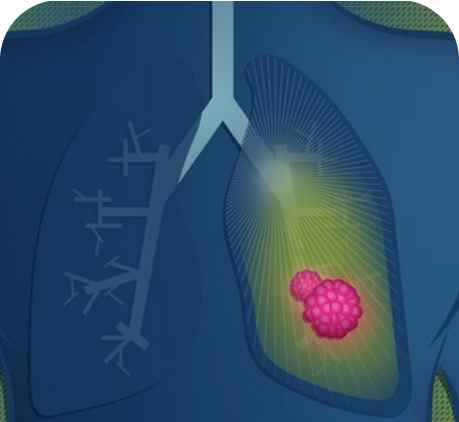
In many cases, lung cancer goes undetected until it is in advanced stages, or the cancer comes back after initial treatment.1 For patients who experience recurrence, outcomes are especially poor.2,3 The UK has one of the worst five-year survival rates for lung cancer in Europe.4
The earlier we can detect and treat lung cancer, the closer we are to cure.2,3 To meaningfully improve outcomes, we are prioritising earlier screening and diagnosis, along with optimising treatment pathways for better patient care and improved survival.
Lung cancer is the most common cause of cancer death in the UK, accounting for one in five (21%) of all cancer deaths.5
It’s time to address lung cancer survival rates in the UK
Hear from Professor Neal Navani, Consultant in Thoracic Medicine and Lorraine Dallas, Director of Information, Prevention and Support, Roy Castle Lung Foundation as they explore why progress in lung cancer survival falls short compared to other cancers, the impact on UK patients and what decisive action is needed to save lives. Click the following link to find out more.
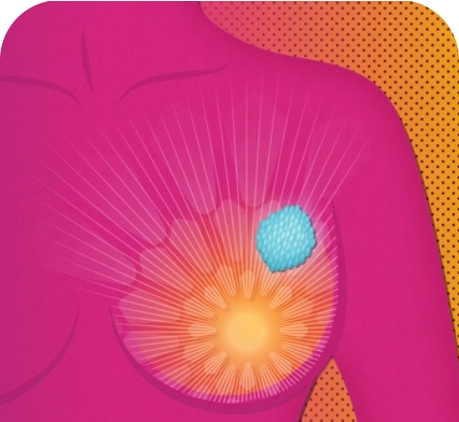
Breast cancer care has transformed over the last 50 years,6 and we are proud to have supported this through research and development.
We are leveraging the power of breakthrough science to develop practice-changing innovation, and by developing treatments across multiple scientific platforms, we are working toward dramatically improving outcomes for patients living with breast cancer in the UK.
Almost 56,000 people are diagnosed with breast cancer per year in the UK – equating to around 150 per day, and accounting for 15% of all new cancer cases.7

Ovarian cancer is the sixth most common cause of cancer death in females in the UK, accounting for 5% of all cancer deaths in women in the country.8
We have focused our attention on ground-breaking science to further our understanding of targeted therapies within ovarian cancer to deliver treatments that provide a chance of improving the outcomes for patients living with ovarian cancer in the UK.

In the UK, the five-year survival rate for early-stage diagnosis is 95% (stage I), this drops to as low as 15% in the late-stage of ovarian cancer (stage IV)9

Among haematologic malignancies, our core areas of focus include acute myeloid leukaemia (AML), myelodysplastic syndrome (MDS), chronic lymphocytic leukaemia (CLL), diffuse large B-cell lymphoma (DLBCL), mantle cell lymphoma (MCL), and multiple myeloma (MM).
We are dedicated to leveraging science-driven insights and furthering innovative purpose-led partnerships to help deliver on our goal of transforming healthcare delivery and the development of treatment options for patients living with blood cancer in the UK.

There are more than 100 different types of blood cancer and related disorders of the blood, bone marrow or lymph nodes, including leukaemias, lymphomas, and myelomas.10
These blood cancers are collectively the fifth most common cancer in the UK, with over 40,000 people being diagnosed every year.11,12
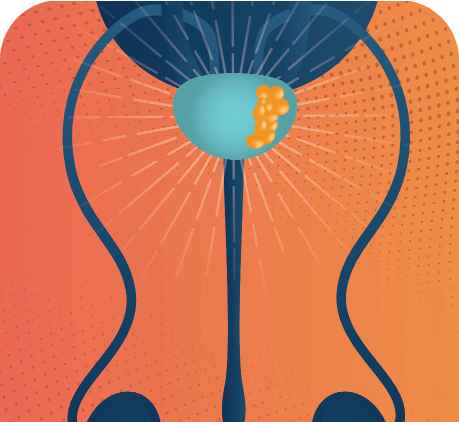
As is the case with many cancers, early diagnosis of prostate cancer is key to improving outcomes, as the five-year survival rate drops from 96% for an early-stage diagnosis to 49% for a late-stage diagnosis.13 Earlier diagnosis reduces disease progression and helps patients live longer, and we are committed to working with the prostate cancer community to positively change this trajectory.13
Despite recent advances in treatments for metastatic prostate cancer the unmet need remains considerable. We will continue to build our research that helps us develop personalised therapies with life-changing potential, so we can one day achieve our ambition of eliminating prostate cancer as a cause of death in the UK.
Prostate cancer is the most common cancer for men in the UK, and is one of the most frequently diagnosed cancers, with approximately 52,300 new cases identified every year.14
Prostate cancer is also the second most common cause of cancer death in men in the UK, with 12,000 lives being lost every year.14
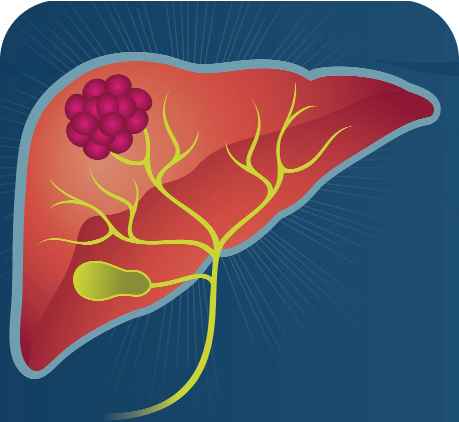
There is a rising incidence in liver cancer in the UK that is being driven by an increase in the underlying conditions (e.g. cirrhosis, non-alcoholic fatty liver disease, and diabetes) that cause chronic inflammation of the liver.15 This interferes with the ability of liver immune cells to function as normal (immunosuppression) and increases the risk of liver cancer.16
Our goal is to continue advancing research into the biological drivers of immunosuppression involved in liver cancer, so we can keep developing promising immunotherapies that can help deliver life-changing outcomes for patients in the UK.
Since the early 1990s, liver cancer incidence rates have increased by more than two-and-a-half times (167%) in the UK.17
Liver cancer now accounts for 2% of all cancer cases in the UK and is responsible for around 5,800 deaths each year.17


- LUNGevity Foundation. Screening & Early Detection. Available at: https://lungevity.org/for-patients-caregivers/lung-cancer-101/screening-early-detection Last accessed November 2023.
- American Society of Clinical Oncology (ASCO). Lung Cancer - Small Cell. Available at: https://www.cancer.net/cancer-types/33776/view-all Last accessed November 2023.
- American Society of Clinical Oncology (ASCO). Lung Cancer - Non-Small Cell. Available at: https://www.cancer.net/cancer-types/lung-cancer/view-all Last accessed November 2023.
- Allemani C, et al. Global surveillance of trends in cancer survival: analysis of individual records for 37,513,025 patients diagnosed with one of 18 cancers during 2000–2014 from 322 population-based registries in 71 countries (CONCORD-3). Lancet. 2018;391:1023–1075.
- Cancer Research UK. Cancer mortality for common cancers: Twenty most common causes of cancer death. Available at: https://www.cancerresearchuk.org/health-professional/cancer-statistics/mortality/common-cancers-compared#heading-Zero Last accessed November 2023.
- Cancer Research UK. Cancer in the UK 2019. Available at https://www.cancerresearchuk.org/sites/default/files/state_of_the_nation_april_2019.pdf Last accessed November 2023.
- Cancer Research UK. Breast cancer statistics. Available at: https://www.cancerresearchuk.org/health-professional/cancer-statistics/statistics-by-cancer-type/breast-cancer#heading-Zero Last accessed November 2023.
- Cancer Research UK. Ovarian cancer mortality statistics. Available at https://www.cancerresearchuk.org/health-professional/cancer-statistics/statistics-by-cancer-type/ovarian-cancer#heading-One Last accessed November 2023.
- Cancer Research UK. Ovarian cancer survival. Available at https://www.cancerresearchuk.org/about-cancer/ovarian-cancer/survival Last accessed November 2023.
- Leukemia & Lymphoma Society of Canada. Blood cancers strike anyone, at any age, at any time, without warning. Available at: https://www.bloodcancers.ca/ Last accessed November 2023.
- Blood Cancer Alliance. We are a coalition of charities representing people living with blood cancer. Available at: https://www.bloodcanceralliance.org/ Last accessed November 2023.
- Blood Cancer UK. Facts and information about blood cancer. Available at: https://bloodcancer.org.uk/news/blood-cancer-facts/ Last accessed November 2023.
- Cancer Research UK. Prostate cancer survival statistics. Available at: https://www.cancerresearchuk.org/health-professional/cancer-statistics/statistics-by-cancer-type/prostate-cancer/survival#heading-Three Last accessed November 2023.
- Cancer Research UK. Prostate cancer statistics. Available at: https://www.cancerresearchuk.org/health-professional/cancer-statistics/statistics-by-cancer-type/prostate-cancer Last accessed November 2023.
- Office for Health Improvement and Disparities. Liver disease: applying All Our Health. Available at: https://www.gov.uk/government/publications/liver-disease-applying-all-our-health/liver-disease-applying-all-our-health Last accessed November 2023.
- Noor MT and Manoria P. Immune Dysfunction in Cirrhosis. J Clin Transl Hepatol. 2017;28:50-58.
- Cancer Research UK. Liver Cancer Statistics. Available at: https://www.cancerresearchuk.org/health-professional/cancer-statistics/statistics-by-cancer-type/liver-cancer#heading-Zero Last accessed November 2023.
GB-61389 | DOP: November 2024


GB-69529 | DOP: August 2025
© AstraZeneca 2023
GB-69529 | DOP: August 2025
© AstraZeneca 2023